Souness Dives Into Rangers’ Challenges: The Revolution Years (1986–1991)

When Graeme Souness was sent off 36 minutes into his debut as Rangers’ player-manager, it set the tone for the next five years at Ibrox. Souness was going to tackle everything head on to reignite the Glasgow giant’s fortunes, regardless of whether he could win the ball or not.
Souness at least lasted longer than Gerry Gow in his infamous two-minute, two-booking home debut for Rotherham United three years earlier, and took some encouragement from the ‘team ethic’ on show as Rangers players raced to join the ensuing on-pitch brawl.
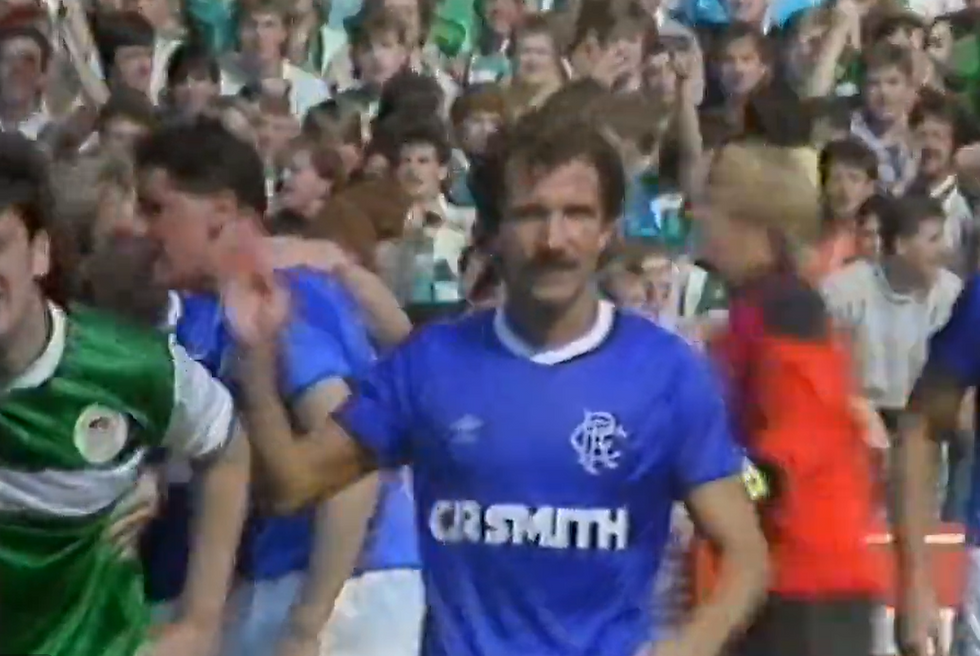
Come the start of May when the tough-tackling Souness – who incredibly had avoided any red cards during his time at Liverpool – was sent off after 30 minutes against Aberdeen, the 10 men of Rangers were established enough to secure the point needed to crown them Scottish champions for the first time in nine years.
Souness had been a shock appointment when he was unveiled as Rangers player-manager in April 1986, tasked with reviving their fortunes. Not only had Rangers fallen behind Glasgow rivals Celtic, but also Aberdeen and Dundee United - who had had the temerity to win four Scottish Premier League titles over that period. Indeed, Rangers had not finished in the top three for four seasons and finished fifth in 1986.
Souness failed to repeat his success at Liverpool and within a few years would bring his own special calming presence to Galatasaray’s rivalry with Fenerbahce
At age 33, Souness the player still had plenty to offer on the pitch – when he was able to stay on it – but he was just part of string of eye-catching signings which transformed the club. England internationals Chris Woods and Terry Butcher joined that summer, along with Watford striker Colin West and Northern Ireland full-back Jimmy Nichol. Spurs defender Graham Roberts followed later that season.
All told Rangers had a net spend of around $2 million that summer. By contrast Celtic, fresh from pinching the title after Hearts’ last day implosion, spent no money that summer in making three free transfer additions.
If Souness the player was a no-brainer, his appointment as manager was a risk. But Rangers could take inspiration from his former Scotland and Anfield team-mate Kenny Dalglish, who at the time was successfully leading Liverpool to their first ever double from the pitch. And just as Dalglish was backed by Liverpool boot room servant Ronnie Moran, Rangers brought in an experienced assistant to support Souness.
Walter Smith had been largely coaching at Dundee United after injury cut short his first team career – amassing a record 360 reserve team games in the process. He was assistant manager to Jim McLean when the club won the title in 1983. He was also Alex Ferguson’s assistant for Scotland at the 1986 World Cup, at which Souness the player and captain was dropped for the final group match which confirmed their exit.
Despite the inauspicious start for Souness and Rangers – they lost two of their opening three games – Rangers gradually gained momentum after a triumph over Celtic in the Skol Cup final. A 19-game unbeaten run from November, including 16 wins, put them in the box seat for the title.
Part of the lure for Woods, Butcher and co was the opportunity to play European football, as English clubs had been banned since the 1985 Heysel tragedy. This would enable Rangers to attract top English and Scottish talent over Souness’ time in charge, reversing a trend which had seen Scotland’s best players head south for many years.
Ray Wilkins, Richard Gough, Trevor Francis and Mark Walters joined the following season, while Gary Stevens, Trevor Steven and Mark Hateley were among other big names tempted to Ibrox under Souness. The signing of Walters was particularly notable, as he was the only black footballer playing in the Scottish Premier League at the time. His spell in Scotland was soured by racist abuse from the terraces.
On the pitch, Souness picked up where he left – getting sent off against Celtic in August 1987 after taking out a one-booted Billy Stark out. As the Celtic player was bizarrely holding the other boot in his hand at the time, he should probably be grateful Souness didn’t aim for that one. Celtic, under returning boss Billy McNeill, won the game 1-0 and didn’t look back as they regained the Scottish title.


But as Rangers continued to heavily invest, the pendulum swung decisively back their way in the 1988-89 season. Rangers thrashed Celtic 5-1 and 4-1 on the way to the title, and significantly won at Parkhead for the first time since 1980. Souness’ second title was to be the first of Rangers’ nine consecutive league triumphs.
There was though still one last taboo for Souness to break. Rangers long-held unofficial policy of not signing Catholics. Celtic had no such policy. Indeed, long-serving manager Jock Stein – a Protestant – once joked he would always sign a Protestant over a Catholic because he knew Rangers would not sign the latter.
Souness, posed the question at his first press conference, indicated religion would not determine his signings.
It took him longer to demonstrate that than he probably wanted. West Ham striker Frank McEvennie revealed Souness had sounded him out about a move to Ibrox, but McEvennie chose Celtic – not so much on religious grounds but because it was his boyhood club. He also reportedly made approaches to sign Ray Houghton and John Collins – who would later sign for Celtic. Meanwhile, John Spencer – a youth player who chose Rangers over Celtic - made his debut under Souness in 1988.
Souness was going to tackle everything head on to reignite the Glasgow giant’s fortunes, regardless of whether he could win the ball or not
But when Rangers finally did sign a Catholic, it could not have been a more controversial Old Firm transfer. Mo Johnston was already a Celtic hero after a successful spell at Celtic Park between 1984-87. But when a move by Celtic to sign him back from French club Nantes faltered, Souness acted swiftly to make Johnston an offer he couldn’t resist.
The signing shocked Scottish football and was only marginally more popular with many Rangers fans than it was Celtic. It was not until Johnston scored the winner for Rangers in the Old Firm derby in November 1989 that his position – among supporters of both clubs – was truly cemented.
After that, maybe there was nothing left for Souness to conquer - other than tea ladies at St Johnstone. When Liverpool came calling in April 1991, Souness jumped at the chance – strangely leaving with Rangers two games away from sealing a far from certain third consecutive title.
Smith finished the job on the last day of the season and – as Rangers continued to spend heavily - built on the platform to win six more consecutive titles.
Souness meanwhile failed to repeat his success at Liverpool and within a few years would bring his own special calming presence to Galatasaray’s rivalry with Fenerbahce.
Listen To The Podcast
Stuart Murray joined us to look back at this incredible era in which Souness and Rangers turned the tide of Scottish players heading south of the border and brought a host of English stars to Ibrox.
How We Ranked Them
We have five categories of greatness from our five-star All-Time Greats category at the top to our one-star Blinkered Greats category at the bottom. For what Souness achieved on and off the pitch, we ranked this Rangers side ****True Greats

Left back Jimmy Phillips, signed from Bolton Wanderers, was one of Souness’ less heralded signings in that first title-winning season. He lasted another season at Ibrox before joining second tier Oxford United before later signing for Middlesborough and rejoining Bolton.


Comments